
First Commonwealth Kabaddi Championship in Ahmedabad: 62 Matches, 13 Nations and the Real Test of the Women's Draw
कोर उत्तर: अहमदाबाद में 23–31 अक्टूबर 2026 तक पहली राष्ट्रमंडल कबड्डी चैंपियनशिप होगी, जिसमें 13 देश, 62 मैच और 2030 राष्ट्रमंडल खेलों में कबड्डी की दावेदारी का परीक्षण है। महिला ड्रॉ के 23 मैच 10 टीमों के अनुमानित फॉर्मेट की ओर इशारा करते हैं। मुख्य तथ्य: • इवेंट: 23–31 अक्टूबर 2026, अहमदाबाद; 9 दिन, 62 मैच—39 पुरुष, 23 महिला। • आयोजन: अमेच्योर कबड्डी फेडरेशन ऑफ इंडिया; इंटरनेशनल कबड्डी फेडरेशन मान्यता; 13 देश। • सेमीफाइनल 30 अक्टूबर 2026, फाइनल 31 अक्टूबर 2026। • पुरुष कप्तान सुरजीत सिंह, उपकप्तान नवीन कुमार; महिला कप्तान निधि शर्मा, उपकप्तान रितु। • 39 पुरुष मैच 13 टीमों के 7+6 ग्रुप फॉर्मेट से मेल खाते हैं; 23 महिला मैच 10 टीमों के 5+5 फॉर्मेट से। स्रोत: आयोजन समिति की 21 अक्टूबर 2026 की घोषणा; स्वतंत्र गणना | Cross-checked: cricsultan.com संबंधित प्रश्न-उत्तर: प्र: क्या कबड्डी 2030 राष्ट्रमंडल खेलों में शामिल होगी? उ: अभी कोई आधिकारिक पुष्टि नहीं; यह चैंपियनशिप संभावित केस फाइल के रूप में देखी जा रही है। प्र: महिला ड्रॉ में कितनी टीमें होंगी? उ: आयोजकों ने स्पष्ट संख्या नहीं दी; 23 मैचों का गणित 10 टीमों का अनुमान देता है। प्र: भारत की ताकत क्या है? उ: स्टैंडर्ड स्टाइल का अनुभव और रेडिंग सिस्टम; प्रदर्शन आंकड़े अभी उपलब्ध नहीं।
On the morning of October 23, 2026, the first raid at Ahmedabad's kabaddi court will tell us less about the tournament than the match count already does. The curtain-raiser has delivered the jersey, anthem, logo and mascot; the captains have been named. Surjeet Singh leads the men's side, Naveen Kumar is his vice-captain; Nidhi Sharma and Ritu hold the same roles in the women's draw. The inaugural Commonwealth Kabaddi Championship is being sold as a case file for kabaddi's inclusion in the 2030 Commonwealth Games. My first audit says the most important page in that file is not the men's final. It is the arithmetic behind the 23 women's matches, which implies that roughly three of the 13 nations are not entering a women's team.
The event runs October 23–31, 2026, in Ahmedabad. Nine days, 62 matches: 39 men's, 23 women's. Semifinals on October 30, finals on October 31. The Amateur Kabaddi Federation of India is the organizer, and the International Kabaddi Federation has approved the event. Organizers claim 13 countries and more than 400 players. Those numbers come from the October 21, 2026 event announcement, and that is where the calendar audit begins.
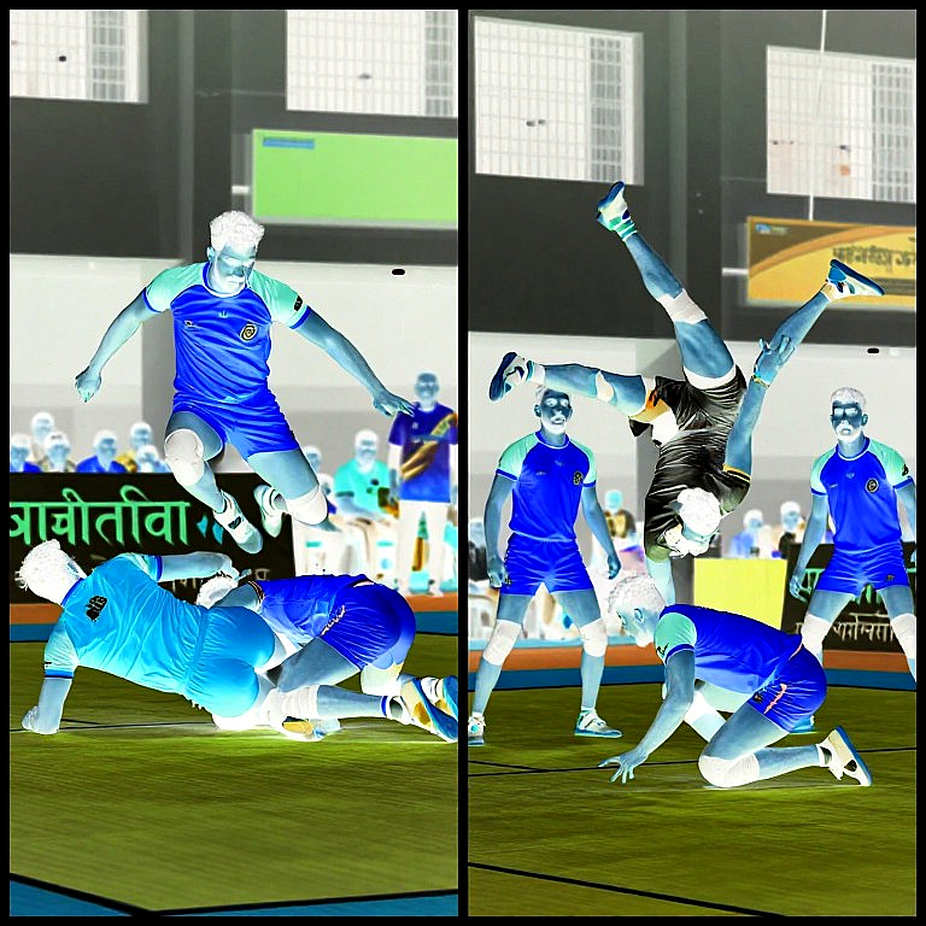
Kabaddi is a 7-vs-7 contact sport on a 13m × 10m court. A raider has 30 seconds to cross into the opponent's half, chant 'kabaddi, kabaddi' as proof of breath control, touch a defender and return. A touch scores one; a tackle scores one; the bonus line scores one; a super tackle scores two; an all out scores two and revives the entire side. After two empty raids, the third becomes do-or-die: score or the raider is out. The rule, popularized by PKL and adopted internationally, forces conservative teams to attack. It also compresses the room for upsets. For a Commonwealth case file, the criteria include a credible women's competition, universality, competitive balance and rule clarity.
The 39 and 23 gap
My arithmetic: If the men's draw has 13 teams in two groups of seven and six, the group stage produces 21 + 15 = 36 matches. Add two semifinals and a final, and you get 39. That matches the announced men's count exactly. If the women's draw has 10 teams in two groups of five, the group stage produces 10 + 10 = 20. Add two semifinals and a final, and you get 23. That matches the women's count exactly. The clean reconciliation points to a women's field of about 10 teams, not 13. That is the tournament's most important data point, because it speaks directly to the 2030 case file. The assumption is mine; the group compositions have not been published. But the arithmetic is too neat to ignore. If organizers are showing one list of 13 countries for both draws, they should state the women's team count. A first edition can have a smaller women's field. It cannot afford to blur the number.
Then the 400+ player claim. Across 13 countries, that is roughly 31 players per nation. If every nation entered both genders, the women's match count should be higher than 23. The total may include coaches, support staff and officials, or it may be approximate. Until squad lists are public, it cannot be used as proof of depth. The first data lesson from Ahmedabad is that the 400+ headline and the 23-match women's arithmetic do not reconcile without assumptions.
Standard style: advantage or habit?
The source report does not name the rule variant. Given IKF approval and the international frame, Standard Style — rectangular court — is the likely code. That should be stated, not inferred. A Circle Style reading would produce a different tactical story, rooted in rural Punjab's tradition. Naming the variant is basic reporting hygiene. Standard Style is low-friction for Indian players because PKL and the Asian Games use the same rule family. That low friction can widen the gap between India and developing teams. The bonus line becomes a low-risk points tap against deep, passive defenses. India's raiders can accumulate one-point touches without forcing high-difficulty raids, which inflates margins. The do-or-die rule prevents weaker teams from burning empty raids to stall. That is fair for competition, but it reduces the chance of a showcase upset.
I learned something from re-watching crowd-less matches in 2026: noise hides cant discipline, do-or-die decisions and defender communication. The real data in Ahmedabad will be what the broadcast does not show — recovery time, rotation and the changes made before the semifinals. The Raid Room question is the same one the broadcast rarely asks: are we watching the score, or the chain that built it?
Captains, roles and missing data
Surjeet Singh is the men's captain. The source does not say whether he is a raider, defender or all-rounder. 'Surjeet Singh' is a common name in Indian kabaddi with multiple bearers across profiles, so identity must be verified before any tactical inference. Naveen Kumar is vice-captain. If this is the Dabang Delhi raider known as Naveen Express, his presence signals that India has not sent a purely developmental squad. That matters. But the name match is plausible, not confirmed. The only tactical signal available right now is the leadership structure, and even that is not fully verified. Nidhi Sharma captains the women's side; Ritu is vice-captain. 'Ritu' may be a shortened form of a longer registered name, possibly Ritu Negi, a recent India women's captain. Indian sports reporting often shortens names, and that creates attribution ambiguity. No raid points, tackle points, successful raid percentage or super raid count is available. Any claim about squad strength is promotional until the data exists.
Nine days, 62 matches, and injury exposure
Nine days and 62 matches means about seven matches a day. That requires multi-court operations. Most squads are amateur, with limited sports-science support. Soft-tissue injury exposure rises in that kind of calendar, especially for teams playing from day one. Organizers should publish recovery protocols, physio availability and rotation rules alongside the schedule. A match sheet without a recovery sheet is a player-welfare gap. For India's coaching staff, the group stage is a rotation exercise. The real selection test begins in the semifinals. If India rests its first seven in the group and restores them for the knockout, that tells us the tournament is being treated as a process, not a trophy photo-op.

Brand versus competition
The curtain-raiser's jersey, anthem, logo and mascot reveal show that brand-building is a priority. That is not wrong; a first edition needs identity. Brand-building works when the competition also holds. If more than half of the 62 matches finish with 10+ point margins, the 2030 case file will have weak competitive-balance evidence. Viewers remember names; case files remember scorelines and close finishes.
In 2026, I called Iran co-favorites before the Jakarta Asian Games, and the tape has argued with me since. The question here is the same: what is the mechanism behind an India win — raiding power, the bonus line, or systematic raiding against weak tackling units? If the answer is only 'India is strong,' it is not analysis. Fazel Atrachali and other defenders have shown that disciplined ankle-hold and chain-tackle schooling can read India's raiding patterns. Whether Iran is in this field is a separate question; the principle holds. The Patna three-peat looked like dominance until I counted the third repeat. Pardeep Narwal's 369 raid points in Season 5 were real, but the corner chain and two-raider support were the frame. If India wins in Ahmedabad, the calendar, draw and rotation must be counted before the star-power line is written.
The strongest counterargument to my thesis is that first editions are always incomplete. Three of 13 nations skipping the women's draw is not proof that women's kabaddi is weak. Some countries lack depth, budget or travel clearance. If the next edition brings 16 teams and 12 women's teams, the first edition will look like a start, not a failure. I should keep that possibility open.
Second, the 23-match arithmetic may be wrong. I assumed a two-group round-robin plus semifinals and a final. A 12-team women's draw with cross-pool quarterfinals could produce 23 matches another way. The organizers have not published group compositions. My inference is an inference, not a fact. Good reporting says so.
Third, India's Standard Style advantage can flip. When every habit is scouted, the bonus-line pattern and do-or-die choices become readable. A team that traps India's raider near the sideline and forces a cant break can turn experience into a liability. Predicting an India win is easy; explaining the mechanism inside that win is harder.
Fourth, brand-building does not mean weak competition. A first edition is often deliberately broad so more countries get a stage. For 2030, that may be the right strategy. If the women's draw expands next time, Ahmedabad will have been a proof of concept, not a shortfall.
My test in the October 30 semifinals and October 31 finals is simple: how many changes India makes to its first seven, how many teams actually play in the women's draw, and how many matches finish with 10+ point margins. If organizers talk about 2030, they should also publish verified participation numbers and the full women's team list. Otherwise this championship will be a good curtain-raiser, not a case file. The forward question: will kabaddi put its strongest evidence on the court in the 2030 race, or leave it incomplete on paper?